

Home Modifications for Seniors: Complete 2026 Guide by Room
Home modifications help seniors age in place safely by removing fall risks and mobility barriers room by room. This hub covers the seven rooms that matter most, real cost ranges for every modification, the four federal grant programs that pay for the work, and how to find a CAPS-certified contractor in your ZIP.
Last updated: May 15, 2026
Disclosure: We may earn a commission if you buy through links on this page, at no extra cost to you. It never changes what we recommend. See our editorial policy.
What Home Modifications Help Seniors Age in Place Safely?
Home modifications for seniors are changes to a home that lower fall risk, remove mobility barriers, and make daily tasks easier for an older adult. The most common modifications are grab bars, walk-in tubs or curbless showers, stair lifts, ramps, wider doorways, and better lighting. About 75% of adults age 50 and over want to stay in their current home as they age (AARP Home and Community Preferences Survey), and the U.S. Census Bureau reports that 11,400 Americans turn 65 every day. The work splits into seven rooms or systems, each with its own cost range and priority level.
Get Matched With a CAPS-Certified Contractor
The fastest way to plan home modifications the right way is to talk with a CAPS-certified pro in your ZIP. They follow universal-design rules that pure builders miss, like 33 to 36 inch grab bar height, 1.25 inch bar diameter, 60 inch wheelchair turning radius, and reinforced wall blocking sized to the actual person.
Get matched with a CAPS-certified contractor in your ZIP so the modifications follow universal-design best practices, so aging in place stays safe, so staying in your home stays the right choice.
The Room-by-Room Cost Table
Standing up out of a chair is its own problem, separate from walking. A lift chair tilts the whole seat forward to bring somebody upright, and the measurement that decides whether it works is the back of the knee to the floor, not the price.
Every modification on this page is priced for an installed job in 2026 dollars. Costs vary by region, by home age, and by how much wall blocking, plumbing, or electrical work hides behind the project. Priority is set by fall risk, daily-use frequency, and return per dollar.
| Room | Modification | Cost Range | Priority |
|---|---|---|---|
| Bathroom | Grab bars (installed, pair) | $50 to $300 | High |
| Bathroom | Comfort-height toilet | $300 to $700 | High |
| Bathroom | Walk-in tub | $2,000 to $10,000 | Medium |
| Bathroom | Curbless roll-in shower | $3,000 to $15,000 | High |
| Bathroom | Non-slip flooring | $300 to $2,500 | High |
| Bedroom | Bed rail or hospital-style bed | $80 to $1,500 | Medium |
| Bedroom | Motion-activated nightlight path | $40 to $200 | High |
| Stairs | Handrails (both sides, installed) | $100 to $500 | High |
| Stairs | Straight stair lift | $3,000 to $5,000 | High |
| Stairs | Curved stair lift | $8,000 to $15,000 | High |
| Stairs | Modular wheelchair ramp | $500 to $5,000 | High |
| Kitchen | Lever faucet | $150 to $400 | Medium |
| Kitchen | Pull-out shelves (per cabinet) | $120 to $400 | Medium |
| Kitchen | Lower microwave to counter height | $200 to $700 | Low |
| Entry | Zero-step entry build | $1,000 to $10,000 | Medium |
| Entry | Wider doorway (per door) | $500 to $1,500 | Medium |
| Entry | Peephole at wheelchair height | $25 to $80 | Low |
| Entry | Lever door handles | $25 to $80 each | Medium |
| Lighting | Motion-activated fixtures | $25 to $150 each | High |
| Lighting | Higher-lumen LED swap | $15 to $40 each | Medium |
| Lighting | Glare-reducing shades or filters | $20 to $200 per room | Low |
| Flooring | Trip-hazard removal (thresholds) | $50 to $300 each | High |
| Flooring | Non-slip surface treatment | $200 to $1,500 per room | High |
Source: 2026 RemodelMax cost data and NAHB CAPS program reference pricing. These are planning ranges, not quotes.
Bathroom: Where Most Modifications Start
The bathroom is the top priority for almost every aging-in-place project. Wet tile, low toilets, narrow tub walls, and overhead-only lighting all stack the odds against an older adult. Five core modifications cover most of the risk.
- Grab bars near the toilet and shower: Mounted to studs or 2x6 blocking. Never suction-cup bars. See our grab bar installation cost guide and step-by-step installation guide.
- Comfort-height toilet: 17 to 19 inches to the seat. Easier to sit down on and stand up from.
- Walk-in tub or curbless shower: The walk-in tub keeps a soaking option; the curbless shower removes the threshold entirely. See the walk-in tubs cost guide and curbless shower installation guide.
- Non-slip flooring: Textured tile, vinyl with a high coefficient of friction, or a non-slip surface treatment on existing tile.
- Handheld showerhead: Lets the user wash while seated on a transfer bench. See our best shower chairs and benches guide.
For a full bathroom plan with measurements and design rules, see the senior bathroom remodel breakdown, the bathroom safety for seniors guide, and the ADA bathroom requirements reference.
Bedroom: The Path From Bed to Bathroom
Getting in and out of bed is where a good many night-time falls start, and abed rail is a cheap answer to it. Hearing belongs in this room too: someone who cannot hear a smoke alarm at night is less safe at home in a way no grab bar fixes, andover-the-counter hearing aids no longer need a prescription.
Most night falls happen on the path from bed to bathroom. The bedroom does not need a full remodel, but four cheap items cover most of the risk.
- Motion-activated nightlights: Place along the floor on the bed-to-bathroom path. Warm-tone LEDs in the 2700K range avoid the sharp blue light that disrupts sleep. See the night lighting guide.
- Bed rail or transfer pole: Gives a stable handhold to sit up and stand. A hospital-style bed makes sense only if there is a medical reason.
- Phone or alert device within arm reach: A medical alert button on the nightstand cuts response time after a fall. See our best medical alert system picks.
- Clear floor space: Move throw rugs, cord clutter, and low furniture out of the bed-to-bathroom path. This costs zero dollars.
Stairs: The Biggest Barrier to Staying Home
Stairs are the single biggest reason older adults move out of two-story homes. The fix is rarely all-or-nothing. Most families start with handrails, then add a stair lift if the climb gets too hard.
- Handrails on both sides: Code minimum is one rail; aging-in-place practice is two, both at 34 to 38 inches above the stair nosing.
- Contrasting stair-edge tape: A bright color band on each step nosing helps low-vision users see the edge.
- Brighter stairwell lighting: Higher lumens, two-way switching at the top and bottom, glare-free fixtures.
- Stair lift: Straight lifts run $3,000 to $5,000 installed. Curved lifts run $8,000 to $15,000. See our stair lift cost guide, best stair lift picks, Acorn stairlift review, and Bruno stair lift review.
- Wheelchair ramp: For outdoor steps. Modular aluminum ramps install in a day at 1:12 slope. See the wheelchair ramp guide, installation guide, and best wheelchair ramp picks.
Kitchen: Small Changes, Big Daily Wins
Few kitchens need a full retrofit. Targeted changes make the kitchen friendlier for arthritic hands, seated work, and low-vision users at low cost.
- Lever faucet: Replaces round knobs. Use one hand or a forearm to turn on water. $150 to $400 installed.
- Pull-out shelves: Roll-out trays inside lower cabinets bring the back of the cabinet to the front. No reaching past hot pots. For things on a high shelf or on the floor, see reach and grip aids.
- Lower microwave: Move an over-range microwave to a counter shelf at 30 to 36 inches. No reaching overhead with hot food.
- D-pull cabinet hardware: Easier to grip than round knobs. About $5 to $15 per pull.
- Task lighting under cabinets: LED strips at 4000K above the counter remove dark spots where knives and hot surfaces hide.
Entry: Getting In and Out Without a Step
The front entry is the second-highest-fall area after the bathroom. Stepping up onto a porch with bags, mail, or a walker in hand is the typical setup for an injury. The fix is to remove the step or add a clear handhold.
- Zero-step entry: A graded walkway with no threshold, or a built-up porch level with the door. The most expensive modification on the entry list, but the highest impact.
- Wider doorways: 32 inches clear width is the ADA minimum; 36 inches is the universal-design standard. A swing-clear hinge can add up to two inches of clear width at low cost.
- Peephole at wheelchair height: A second peephole at 43 inches above the floor lets a seated user see who is at the door.
- Lever door handles: Replace round knobs throughout the home. Easier on arthritic hands and elbows. See door handles and locks.
- Keyless entry: A smart lock with a code keypad removes the fine-motor task of turning a key.
- Motion-sensor porch light: Hands-free activation when arriving with bags or a walker.
Lighting: Cheaper Than It Looks, Bigger Than It Feels
By age 65 the average adult needs about three times the light a 20-year-old needs to read the same text (American Optometric Association). Most homes are wired for the younger eye. Lighting upgrades return more safety per dollar than any other category except the bathroom.
- Motion-activated fixtures: Hallways, bathrooms, closets, stairs, and the entry. Hands-free on, automatic off.
- Higher-lumen LED swaps: Replace 60W equivalent bulbs (800 lumens) with 100W equivalent (1,600 lumens) at the same wattage. Pair with warm-tone (2700K to 3000K) for living spaces.
- Glare reduction: Frosted bulbs, shaded fixtures, or window film cut the harsh reflections that mask floor edges and thresholds.
- Switches at 42 inches: Standard switch height of 48 inches works for standing adults but is too high for a seated user. The 42 inch height works for both.
For full-home lighting and control planning, see the smart home for seniors guide.
Flooring: Remove the Trip Hazards
Flooring fixes are a mix of cheap and expensive. Pull the cheap fixes first.
- Remove throw rugs: Free. Throw rugs cause about a third of indoor trips for older adults (CDC). Replace with low-pile fitted carpet or none at all.
- Eliminate raised thresholds: Plane down or replace with a flush transition strip. Each one runs $50 to $300 installed.
- Non-slip surface treatment: A chemical etch on existing tile raises the friction without replacing the floor. About $200 to $1,500 per room.
- New flooring: Luxury vinyl plank, cork, or low-pile carpet over a flat subfloor. Avoid high-pile carpet (catches walker wheels) and shiny ceramic tile (slick when wet).
What Federal Grants Pay For
Funding is the part most families get wrong. There are four real federal sources, and most people use a stack of two or three.
VA HISA Grant (Home Improvements and Structural Alterations)
Pays up to $6,800 for veterans with service-connected disabilities and up to $2,000 for veterans with non-service-connected disabilities. Covers bathroom modifications, ramps, widened doorways, and similar work. Apply through your VA prosthetics office. Source: va.gov.
VA Specially Adapted Housing (SAH and SHA)
Pays up to $109,000 (SAH) or $21,900 (SHA) for veterans with certain severe service-connected disabilities. Covers major work including no-step entries, wheelchair-accessible bathrooms, and full retrofits. Apply through your VA regional office. Source: va.gov.
USDA Section 504 Home Repair Program
Low-interest loans up to $40,000 (1% interest) plus grants up to $10,000 for very-low-income rural homeowners 62 and older. Covers safety and accessibility repairs. The grant portion does not need to be repaid if the home stays the primary residence for three years. Apply through your state USDA Rural Development office. Source: rd.usda.gov.
Medicaid HCBS Waiver
Medicaid Home and Community-Based Services waivers cover major modifications for qualifying low-income individuals. Rules and caps are set by each state. Coverage runs from a few thousand dollars in some states to a full accessible bathroom in others. Start with your state Medicaid office or the Eldercare Locator at 800-677-1116.
On Medicare: Original Medicare (Part A and Part B) does not cover home modifications. Medicare classifies grab bars and ramps as home improvements, not durable medical equipment. Some Medicare Advantage plans add a small home safety benefit; check your plan. Source: medicare.gov.
On taxes: Medical home improvements may be deductible on Schedule A if total medical expenses exceed 7.5% of adjusted gross income and the primary purpose is medical care. Source: IRS Publication 502.
ADA Standards: The Design Baseline
The Americans with Disabilities Act (ADA) Accessibility Standards do not legally apply to private homes. They cover public buildings and commercial spaces. But every CAPS-certified contractor uses the ADA numbers as the design baseline for aging-in-place work. Source: ada.gov.
- Doorway clear width: 32 inches minimum, 36 inches preferred
- Ramp slope: 1:12 maximum (1 inch rise per 12 inches of run), with 5-foot landings every 30 feet
- Grab bar diameter: 1.25 to 1.5 inches
- Grab bar mounting: 33 to 36 inches above finished floor, into studs or 2x6 blocking
- Toilet height: 17 to 19 inches to the seat
- Wheelchair turning radius: 60 inch diameter clear space
- Reach range: 15 to 48 inches from the floor for switches and outlets
- Curbless shower threshold: under 0.5 inch
CAPS: The Credential to Look For
CAPS stands for Certified Aging-in-Place Specialist. The credential comes from the National Association of Home Builders (NAHB), launched in 2002. CAPS holders complete three required NAHB courses, sign a code of ethics, and renew with continuing education every three years.
There are about 7,000 active CAPS holders in the United States as of 2026 (NAHB membership data). A CAPS pro will quote the design choices a typical contractor misses: grab bar diameter, blocking depth, turning radius, comfort-height toilet selection, and lever handle reach.
For the full breakdown, see the CAPS certification guide, the CAPS-certified contractor guide, and how to find a contractor near you.
Where to Start: A Simple Decision Path
- Walk the home with the safety checklist. Use our aging-in-place checklist to flag every fall risk room by room.
- If there is a current health issue, call for an OT home visit. An occupational therapist watches how the person actually moves. The OT report ranks fixes by real risk.
- Fix the bathroom first. Start with installed grab bars, a comfort-height toilet, and non-slip flooring.
- Add stair handrails on both sides and brighten the stairwell. Cheap, high-return, fast.
- Address the entry next. No-step entry, wider front door, lever handles, motion porch light.
- Layer in lighting, kitchen tweaks, and bedroom path safety. Cheap items that add up.
- Plan the big items (stair lift, walk-in tub, full bathroom remodel) with a CAPS-certified contractor. Layer in VA HISA, USDA Section 504, or Medicaid HCBS funding where it fits.
Ready to Plan Your Home Modifications?
Get matched with a CAPS-certified contractor in your ZIP so the modifications follow universal-design best practices, so aging in place stays safe, so staying in your home stays the right choice.
Frequently Asked Questions
What home modifications are most important for seniors?
The bathroom comes first. Start with mounted grab bars near the toilet and in the shower, a comfort-height toilet, non-slip flooring, and a handheld showerhead. After the bathroom, fix the stairs with handrails on both sides, then handle the front entry with a no-step threshold or ramp. Lighting upgrades on the path from bed to bathroom round out the safety basics.
How much do home modifications cost?
A starter safety kit runs $150 to $500 (two installed grab bars, raised toilet seat, nightlights). Targeted upgrades run $500 to $3,000 (lever handles, threshold ramp, transfer bench). Major equipment runs $3,000 to $15,000 (stair lift, walk-in tub, permanent ramp). A full accessible bathroom runs $10,000 to $25,000. A whole-home retrofit runs $60,000 to $100,000 or more. Most families spend $2,000 to $8,000 on a mix of high-return items.
Does Medicare cover home modifications?
Original Medicare (Part A and Part B) does not cover home modifications. Medicare classifies grab bars, ramps, and remodeling as home improvements, not durable medical equipment, so they fall outside coverage. Some Medicare Advantage plans now offer a supplemental home safety benefit of $250 to $500 per year for items like grab bars and non-slip flooring. Check the back of your Medicare card and call member services. For larger work, look at Medicaid HCBS waivers, VA HISA, or USDA Section 504 grants.
Are home modifications tax deductible?
Medical home improvements may be deductible as a medical expense on Schedule A if total medical expenses exceed 7.5% of adjusted gross income and the primary purpose is medical care. Items often deductible: ramps, widened doorways, lowered cabinets, accessible bathrooms, stair lifts, grab bars. Items usually not deductible: upgrades that add general home value beyond the medical need. The IRS may require you to subtract the value the improvement adds to the home from the deduction. Keep contractor invoices that describe the medical purpose. See IRS Publication 502.
What grants are available for home modifications for seniors?
Four federal programs cover most modifications. (1) VA HISA: up to $6,800 for service-connected disabilities, up to $2,000 for non-service-connected veterans. (2) VA Specially Adapted Housing: up to $109,000 for severe service-connected disabilities. (3) USDA Section 504: up to $40,000 low-interest loan plus up to $10,000 grant for low-income rural homeowners 62 and older. (4) Medicaid HCBS waivers cover larger modifications for qualifying low-income individuals, with rules and limits set state by state. Call the Eldercare Locator at 800-677-1116 for state and local programs.
Where do I start with home modifications?
Start with an occupational therapist home safety assessment if there is any current health issue, recent fall, or new diagnosis. The OT walks the home, watches how the person moves, and writes a ranked list of changes by actual risk. Many Medicare plans cover this when a doctor orders it. With no current health issue, start with the bathroom safety basics yourself, then bring in a CAPS-certified contractor for any work involving plumbing, electrical, or structural changes.
Do I need a permit for home modifications?
Small items like grab bars, lever handles, raised toilet seats, and threshold ramps do not need a permit. Anything that touches plumbing, electrical, or structural framing usually does. That includes walk-in tubs, curbless showers, widened doorways, no-step entries, and stair lift wiring. Permits run $100 to $500 in most jurisdictions and take a few days to three weeks to approve. Your contractor pulls the permit and is responsible if the work fails inspection.
How long do home modifications take?
A single grab bar install takes one hour. A straight stair lift installs in a half day. A walk-in tub swap runs two to four days. A full accessible bathroom remodel takes two to four weeks of active work, plus permit time. A whole-home retrofit with multiple rooms can run two to four months end to end. Long-lead items like custom shower bases, comfort-height toilets, and curved stair lifts can add two to six weeks before work starts, so order early.

The part you can buy today
Not every change needs a contractor. These four are simple swaps that help right away, in any room.
We may earn a commission if you buy through links on this page, at no extra cost to you. It never changes what we recommend. This is general information, not medical advice.

Mr. Beams MB710 Motion Night Light
15 lumens, battery, no wiring
Turns on by itself when someone walks past. Good for the route to the bathroom.
Check price on Amazon
Schlage Accent Lever Door Handle
Passage function, reversible
Push it down instead of twisting a round knob. Easier with sore hands.
Check price on Amazon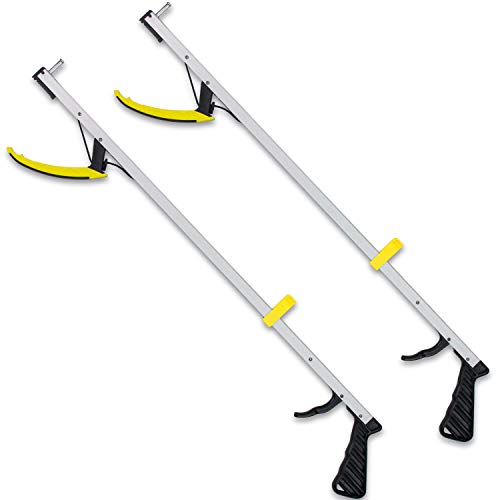
RMS Featherweight 32 in Reacher
32 in reach, 2 pack
Picks things up off the floor or a high shelf, so nobody climbs.
Check price on Amazon
DreamSky Large Display Clock
7.6 in screen, day and date
Big numbers with the day and date. Helps with medication timing.
Check price on Amazon
These are supplies, not the job itself. Amazon does not sell the labour, the permit or the inspection.
Two rooms on this list have their own numbers to work out. The bathroom usually comes down to what a tub-to-shower conversion costs, and any step at an entrance needs a ramp length worked out from the rise.
Two jobs on this list have their own numbers: doorway widths, where a cheap hinge often beats opening a wall, and threshold ramps for a single step.
Related Guides
- Aging-in-Place Remodeling Guide (parent hub)
- Aging-in-Place Renovation Cost Guide
- CAPS Certification Guide
- CAPS-Certified Contractor Guide
- Senior Bathroom Remodel Cost Breakdown
- Bathroom Safety for Seniors
- ADA Bathroom Requirements
- Curbless Shower Installation
- Walk-in Tubs Cost Guide
- Best Walk-in Tubs
- Grab Bar Installation Cost Guide
- Grab Bar Installation Guide
- Best Grab Bars
- Stair Lift Cost Guide
- Best Stair Lift for Home
- Wheelchair Ramp Guide
- Wheelchair Ramp Installation Guide
- Best Wheelchair Ramp for Home
- Best Shower Chair for Elderly
- Smart Home for Seniors
- Find an Aging-in-Place Contractor Near You
- Aging-in-Place Home Safety Checklist

Planning resources by email
New planning tools, refreshed cost numbers, and a note when a product we recommend is discontinued. Occasional, not weekly.
Your address, and nothing else. We never ask about anyone's health, and we do not sell or share the list. Unsubscribe from any email. Privacy policy.