
Aging in Place Checklist, Room-by-Room Home Safety Guide
Is your home ready for aging in place? This room-by-room checklist helps you find the gaps before a fall does.
Last updated: April 2026 · By the AgeInPlaceGuide team· Print this page for a walk-through reference
We may earn a commission if you buy through links on this page, at no extra cost to you. It never changes what we recommend. This is general information, not medical advice.
How to Use This Checklist
Walk through each room with this list, on screen or printed. Check off what is already done. Flag what needs attention. The bathroom and entryways are the highest priority. Start there.
Consider a professional assessment too: A CAPS (Certified Aging in Place Specialist) can assess your home for $150-500 and catch things a self-assessment misses.
1. Entryways and Exterior
The entry is where falls happen before anyone gets inside. A few changes here remove the biggest trip hazards.
No-step entry or a low-slope ramp (max 1:12 slope) at the main entrance
Grab bar at the front door, mounted to a stud, not just drywall
Motion-activated exterior lights on all entry paths
Lever-style door handles on all exterior doors (round knobs are hard to grip with arthritis)
Slip-resistant doormat that lies flat and does not bunch at edges
Keyless entry lock or smart lock (eliminates fumbling with keys at night)
Pathway lighting from driveway or garage to front door
Handrail on all porch or front steps, even if just one or two steps
2. Living Room
The living room is used for hours each day. The goal is clear paths and furniture that supports getting up safely.
Clear pathways of at least 36 inches between furniture, wide enough for a walker or wheelchair
Remove all throw rugs, or secure edges with non-slip tape (throw rugs are the #1 fall hazard in living areas)
Furniture at the right seat height, 17-19 inches makes sitting and standing much easier
Firm seat cushions, soft cushions that sink make it hard to stand without help
No low coffee tables that catch feet in the dark
Lamp placement so no one has to walk across a dark room to reach a light switch
Accessible electrical outlets, not behind furniture or near the floor
Power recliner if standing from a standard chair is already difficult
Looking at a power lift chair?
A lift chair tilts forward and helps you stand. It is the fix when a normal recliner has become a struggle. Prices run about $700 to $2,500. Measure the seat height and the space behind the chair before you order, because most models need a few inches of wall clearance to recline.
Browse Lift Chairs at Coleman Furniture →3. Kitchen
The kitchen combines wet floors, hot surfaces, and heavy items overhead. Small changes make a big difference.
Pull-out shelves in lower cabinets, eliminates bending into deep cabinets
D-ring cabinet handles (easy to pull with limited grip strength)
Anti-scald faucet or water heater set to 120°F max to prevent burns
Lazy Susan in corner cabinets to reach items without twisting
Stove or cooktop with front or side controls, reaching over a burner is a burn risk
Non-slip mat in front of sink and stove
Heavy items (pots, pans, blenders) stored between knee and shoulder height, no overhead heavy items
Contrasting colors on counter edges so depth is easy to judge
4. Bathroom
The bathroom is the highest-risk room in the house. Wet surfaces plus confined space plus balance challenges equals the most fall injuries.
Grab bar next to toilet, 42 inches long, mounted to studs, can support 250 lbs
Grab bar inside shower or tub, horizontal bar at 33-36 inches from floor
Grab bar outside shower entry for step-in/step-out
Shower chair or fold-down bench, sitting to shower removes the biggest fall risk
Handheld showerhead on a slide bar (can be used seated or standing)
Non-slip mat in the shower and on the bathroom floor
Walk-in shower preferred over tub, eliminating the tub step-over removes a major hazard
Contrasting toilet seat (easier to see depth on white-on-white fixtures)
Nightlight that activates automatically for middle-of-night trips
Towel bars rated for body weight support (most decorative ones are not, replace them)
Bathroom safety is its own deep topic.
Grab bars, shower seats, non-slip flooring, our full guide covers everything with product picks and installation tips.
Read the Bathroom Safety for Seniors Guide →5. Bedroom
The bedroom presents risks at night when lighting is low. The goal is safe transfers from bed and a clear path to the bathroom.
Bed at the right height, 17-19 inches from floor to top of mattress makes standing easier
Motion-activated nightlight on the path to the bathroom
Beside lamp or light switch reachable from the bed, do not have to stand up in the dark
Phone or medical alert device within reach from the bed (not across the room)
Firm mattress, soft mattresses make it harder to sit up and stand
Bed rail or transfer handle if getting in and out of bed is already difficult
No cords or rugs in the path between bed and bathroom
Grab bar if transitioning from bed to a wheelchair or walker
6. Stairs
Stairs are the most dangerous area of the home. If access to a second floor is needed daily, these changes are not optional.
Handrail on both sides of every staircase, one rail is not enough if balance is a concern
Non-slip treads on every step, rubber strips or carpet that does not bunch
Lighting at the top and bottom of every staircase with a switch at each end
No clutter stored on any step, ever
Contrasting tape or color on stair nosing so each edge is easy to see
If daily stair use is needed long-term, evaluate a stair lift early, waiting until after a fall is too late
Thinking about a stair lift?
Costs range from $2,500 for a straight staircase to $15,000 for a curved one. Our guide covers real prices, brands, and how to get funding help.
Read the Stair Lift Cost Guide →7. Throughout the Home
These items apply to every room and every person aging in place.
Smoke detector on every level, tested monthly, batteries replaced annually
Carbon monoxide detector near sleeping areas
Medical alert system worn or kept within reach at all times, not just near the phone
Emergency contact list posted on the refrigerator and near every phone
First aid kit in an accessible spot that does not require kneeling or climbing
All medications in one organized location with clear labeling
Night lights in every hallway, bathroom, and bedroom
Clear house number visible from the street for emergency responders
One More Thing: A Medical Alert System
Even the best-modified home cannot prevent every fall. A medical alert system means that when something does go wrong, help is one button press away, 24 hours a day.
Bay Alarm Medical starts at $27.95/month with no contract. It is the first thing we recommend after the bathroom grab bars.
Two items on this list need a number before you can act on them. For a step at a door, measure the rise and use the ramp length calculator. For the bathroom, decide whether the trouble is the height or the push before buying anything.
Three more items on this list have guides of their own: night lighting for the route from bed to bathroom, door handles and locks for hands that cannot grip a round knob, and reach and grip aids so nobody climbs on a chair. For pills, see pill organizers and reminders. For walking, see walkers and rollators with a seat.
Common Questions
What is aging in place?+
Aging in place means choosing to live in your own home as you grow older, rather than moving to assisted living or a nursing facility. About 90% of adults over 65 say they want to age in place. With the right home modifications, most people can do it safely, but it usually requires planning before a fall or health event forces the issue.
How much does it cost to modify a home for aging in place?+
Costs vary by scope. Grab bars cost $150-400 installed. A full bathroom remodel with walk-in shower and accessibility features runs $8,000-25,000. Kitchen modifications average $5,000-15,000. Whole-home modifications for someone using a wheelchair can reach $30,000-80,000. Many families start with the highest-priority rooms (bathroom, entryway) and phase in changes over time.
Does Medicare cover home modifications for aging in place?+
Traditional Medicare does not cover home modifications like grab bars, ramps, or bathroom remodels. Some Medicare Advantage plans offer a home safety benefit of $500-2,500 per year for modifications, call your plan and ask specifically. Veterans may qualify for the VA HISA grant (up to $6,800). Your state Medicaid program may cover modifications under an HCBS waiver if you are eligible.
What is a CAPS professional?+
CAPS stands for Certified Aging in Place Specialist. It is a designation from the National Association of Home Builders for contractors, designers, and healthcare professionals trained in aging-in-place modifications. A CAPS assessment typically costs $150-500 and results in a room-by-room report with prioritized recommendations. Find a CAPS professional at nahb.org or through your local Area Agency on Aging.
At what age should I start preparing my home?+
The best time to modify a home is before a fall or health event, not after. Most experts recommend starting an assessment around age 60-65, or when you notice early signs like stiffness getting out of chairs, hesitation on stairs, or balance issues. Making changes while healthy is less stressful, less rushed, and often cheaper, you have time to plan, budget, and do the work right.
Take this round the house
The planning kit puts this checklist together with the measurements a contractor asks for, a bid comparison sheet, and ramp and stair worksheets. It prints on to paper so you can carry it and write on it. No email, no form.
Open the printable planning kitAffiliate disclosure: AgeInPlaceGuide.com earns a commission when you purchase through links on this page, at no extra cost to you. This does not affect the content of this checklist.

The part you can buy today
Four low-cost changes that show up on almost every checklist, and none of them need a contractor.
We may earn a commission if you buy through links on this page, at no extra cost to you. It never changes what we recommend. This is general information, not medical advice.

Mr. Beams MB710 Motion Night Light
15 lumens, battery, no wiring
Turns on by itself when someone walks past. Good for the route to the bathroom.
Check price on Amazon
Schlage Accent Lever Door Handle
Passage function, reversible
Push it down instead of twisting a round knob. Easier with sore hands.
Check price on Amazon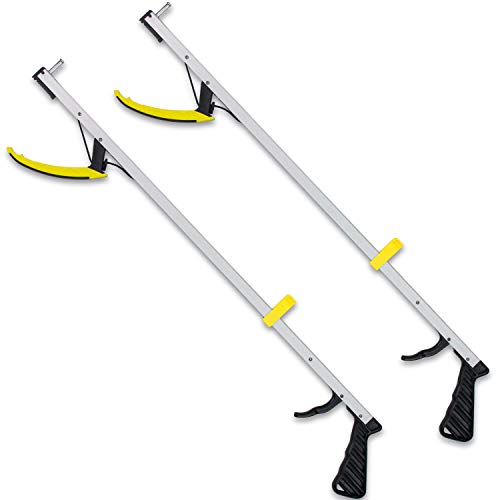
RMS Featherweight 32 in Reacher
32 in reach, 2 pack
Picks things up off the floor or a high shelf, so nobody climbs.
Check price on Amazon
DreamSky Large Display Clock
7.6 in screen, day and date
Big numbers with the day and date. Helps with medication timing.
Check price on Amazon
These are supplies, not the job itself. Amazon does not sell the labour, the permit or the inspection.

Planning resources by email
New planning tools, refreshed cost numbers, and a note when a product we recommend is discontinued. Occasional, not weekly.
Your address, and nothing else. We never ask about anyone's health, and we do not sell or share the list. Unsubscribe from any email. Privacy policy.