

Reach and Grip Aids
The point of a reacher is not convenience. It is that nobody stands on a chair to get the good plates down.
We may earn a commission if you buy through links on this page, at no extra cost to you. It never changes what we recommend. This is general information, not medical advice.
The short answer
The single most useful item is a reacher, because it removes the reason people climb. After that, the biggest win is not a gadget at all: move everything used daily to between hip and shoulder height, so reaching high or bending low stops being part of ordinary life. Grip aids like jar openers and thicker handles help with the tasks that remain.
Rearranging beats buying
Before any gadget, empty the top shelf and the bottom cupboard of anything used daily. Everyday plates, mugs, the kettle, the frequently used pans: all of it belongs between hip and shoulder height.
This is free, takes an afternoon, and removes more risk than any product on this page. The top shelf is where the step stool lives in people's heads.
A reacher removes the reason to climb
Standing on a chair to reach a shelf is one of the more common ways older adults end up in hospital, and it usually happens over something trivial.
A 32-inch reacher covers most of the gap between comfortable reach and the top shelf, and it also picks things up off the floor without bending. Keep one upstairs and one downstairs, because a reacher in the wrong room does not get used.
Grip aids for what is left
Jar and bottle openers Grip strength usually goes before dexterity does. A bench-mounted or lever opener does the work the hand cannot.
Thicker handles Foam sleeves on cutlery, pens and toothbrushes. A wider handle needs less finger closure to hold.
Lever taps Same reason as lever door handles. No twist, no pinch.
Long-handled shoe horn and sock aid Dressing is where a lot of people lose independence first, and both are inexpensive.

Pull-down and pull-out shelving
Where rearranging is not enough, pull-out drawers in base cupboards and pull-down racks in wall cupboards bring the contents to the person.
They are a real cost, usually a few hundred dollars per cupboard fitted, so they suit a kitchen being redone rather than a standalone project.
The part you can buy today
One item does most of the work here. Keep one upstairs and one downstairs, because a reacher in the wrong room is a reacher nobody uses.
We may earn a commission if you buy through links on this page, at no extra cost to you. It never changes what we recommend. This is general information, not medical advice.
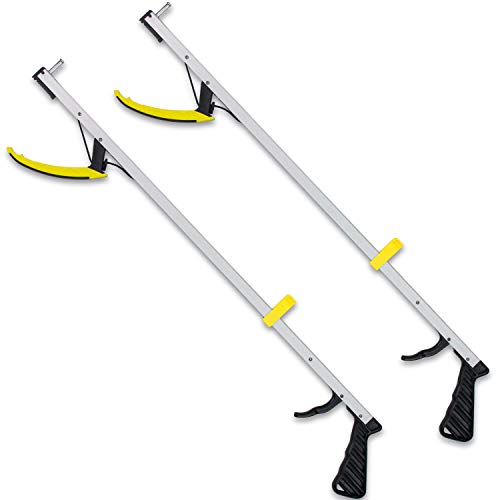
RMS Featherweight 32 in Reacher
32 in reach, 2 pack
Picks things up off the floor or a high shelf, so nobody climbs.
Check price on Amazon
These are supplies, not the job itself. Amazon does not sell the labour, the permit or the inspection.
Common questions
- What is the best reacher for seniors?
- A lightweight one about 32 inches long with a wide claw. Length matters more than features: it needs to bridge the gap between comfortable reach and the top shelf. Buy two and keep one on each floor.
- What helps with weak grip in the kitchen?
- Start by moving daily items between hip and shoulder height, which costs nothing. After that, a jar opener, thicker handles on cutlery and lever taps cover most of what is left.
- Are pull-down shelves worth it?
- In a kitchen already being redone, often yes. As a standalone project they are expensive per cupboard, and rearranging what is on the existing shelves usually gets most of the benefit for free.
- How do I stop an older parent climbing on chairs?
- Remove the reason rather than the chair. Put everything used daily within easy reach and leave a reacher where they will see it. Telling somebody not to climb does not work if the thing they need is still up there.
- What dressing aids actually help?
- A long-handled shoe horn and a sock aid, mostly. Both are inexpensive and both address bending, which is the part of dressing that gets difficult first.