

Project Priority Planner
The hard part is almost never the list. It is knowing which four things to do this week and which four can wait a year without anything going wrong.
Tick whatever is true. The order appears as you go.
How the order is decided
Three things move an item up. Something has already gone wrong, like a fall or a near miss. Something has quietly stopped happening, like washing or going out. Or something else has to happen first, like blocking behind a wall before it gets tiled.
Everything else is ordered by what it costs and how long it takes, because a plan that opens with a $12,000 job is a plan that does not get started.
The signal most people miss
What somebody has stopped doing tells you more than what they say is hard. People rarely announce that the stairs have become frightening. They just start sleeping downstairs.
That is why the second group of questions is about avoidance. A person who has moved their bed into the sitting room has usually also stopped using the upstairs bathroom, and that is a much bigger problem than the one they will mention.
Why there is no score
Plenty of tools return a number: a home safety score, a risk percentage, a rating out of a hundred. They are invented. The inputs are a handful of checkboxes, and no honest formula turns that into a percentage.
So this returns a sequence with a reason on every line instead. Reasons can be argued with, which is exactly what you want when you are deciding how to spend money on somebody's home.
Common questions
- What should I do first to make a home safer for an elderly parent?
- Light the route from the bed to the bathroom and clear the floor of anything that catches a foot. It costs under $100 and takes an evening.
- In what order should aging in place modifications be done?
- Cheap and reversible first, then the trade jobs, then the big builds. The exception is anything that has to happen while a wall is already open, like blocking for grab bars, which should be brought forward whenever a room is being redone anyway.
- What is the most important home modification for seniors?
- It depends entirely on what is already going wrong. For somebody who has fallen at night it is lighting. For somebody sleeping downstairs it is stair access. There is no single answer, which is why this planner asks first.
- Is a home safety score useful?
- Not really. A score from a short questionnaire looks precise and is not, and it tends to end the conversation rather than start one. A list of actions with reasons attached is more use.
- Should we modify the home or move?
- That is a household decision rather than a building one. If moving within two years is realistic, weight the plan toward reversible changes: bars, seats, lights and levers come out and go with you. Stair lifts and shower conversions do not.
Keep going

The part you can buy today
Everything in the first group of the plan above is in this range. These are the cheap, reversible changes, and none of them needs a contractor.
We may earn a commission if you buy through links on this page, at no extra cost to you. It never changes what we recommend. This is general information, not medical advice.

Mr. Beams MB710 Motion Night Light
15 lumens, battery, no wiring
Turns on by itself when someone walks past. Good for the route to the bathroom.
Check price on Amazon
Schlage Accent Lever Door Handle
Passage function, reversible
Push it down instead of twisting a round knob. Easier with sore hands.
Check price on Amazon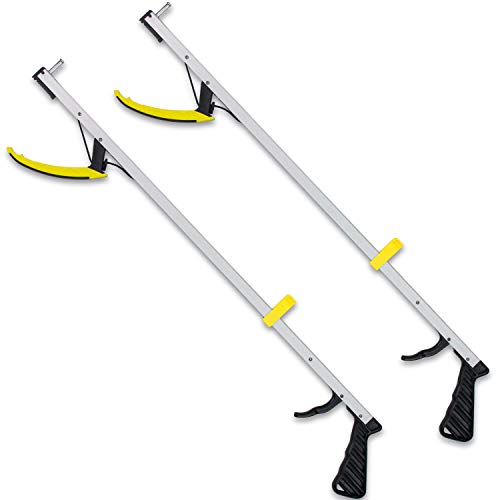
RMS Featherweight 32 in Reacher
32 in reach, 2 pack
Picks things up off the floor or a high shelf, so nobody climbs.
Check price on Amazon
DreamSky Large Display Clock
7.6 in screen, day and date
Big numbers with the day and date. Helps with medication timing.
Check price on Amazon
These are supplies, not the job itself. Amazon does not sell the labour, the permit or the inspection.

Tell me when new planners land
This planner and the bathroom planner are the first two. More are coming, along with refreshed cost numbers as we re-price the jobs.
Your address, and nothing else. We never ask about anyone's health, and we do not sell or share the list. Unsubscribe from any email. Privacy policy.