
AI Fall Detection in 2026: What Actually Changed
April 17, 2026 · 7 min read
Every medical alert company now says their device uses "AI fall detection." Most of them are lying, or at least stretching the truth past the point of usefulness.
Here is what actually changed between 2024 and 2026, which devices use real machine learning versus marketing language, and who should upgrade their fall detection setup.
The Old Problem: Why Traditional Fall Detection Failed
Traditional fall detection worked like this: an accelerometer measured sudden motion. If the motion exceeded a threshold, fast downward movement followed by a hard stop, the device assumed a fall and sent an alert.
This created two problems that drove families crazy.
False alarms.Vacuuming, bending over to pick something up, dropping the phone on the floor, and sitting down hard in a chair all triggered the same alert. Multiple families reported their parent's device going off daily, leading to alarm fatigue, and the device ending up in a drawer.
Missed falls. The threshold approach works poorly on slow-slide falls, where a person loses their balance gradually and ends up on the floor without a sudden impact. These account for roughly 30% of real falls, particularly among seniors with muscle weakness or neurological conditions. The device never triggered.
The fundamental problem: fall detection was being done with a stopwatch, not a brain.
What Changed in 2025–2026
Two things happened that matter.
Apple went on-device ML.Apple Watch Series 10 and Apple Watch Ultra 2 use machine learning models that run entirely on the watch, no cloud dependency. These models were trained on datasets of real falls collected in Apple's research programs. The result is a system that understands context, not just motion. It distinguishes between the motion pattern of a fall and the motion pattern of someone sitting down hard, because the two look different when you analyze the full sequence rather than a single threshold crossing.
Sensor fusion arrived in medical alerts.Bay Alarm Medical's SOS All-in-One added barometric pressure sensing alongside the gyroscope and accelerometer. When someone falls, their elevation changes. Barometric pressure changes with elevation. Combining three independent sensors, motion direction, rotation, and altitude, gives a much richer picture of what happened. This is not "AI" in the ML sense, but sensor fusion is a real improvement over single-accelerometer detection.
The honest framing:Apple's implementation is closest to true AI fall detection. Medical alert companies have improved their algorithms, but most are still threshold-based systems with better sensors, not machine learning trained on real-world fall data.
The Honest Scorecard
Here is where each major device actually stands, not what their marketing says.
| Device | Detection Type | Cost | Verdict |
|---|---|---|---|
| Apple Watch Series 10 / Ultra 2 Requires iPhone. Daily charging. No monitoring center. | On-device ML (real AI) | $399–$799 + $9.99/mo cellular | Best AI |
| Bay Alarm Medical SOS All-in-One 24/7 monitoring center. Works anywhere with cellular. | Sensor fusion (gyro + accel + barometric) | $35/mo | Best Medical Alert |
| Medical Guardian MGMove GPS tracking. Newer algorithm than 2024. | Basic motion threshold detection | $45/mo | Good |
| Life Alert Smart Guardian 3-year contract. Higher false alarm rate than Apple. | Proprietary pattern recognition | $55/mo + contract | Improved |
What AI Fall Detection Still Cannot Do
The improvements are real. But there are hard limits, and knowing them matters for care planning.
Detect falls through walls
A fall in the bathroom while the device is on the nightstand is not detected. The device has to be on the person. This sounds obvious, but it is the source of most real-world failures.
Work when the person is unconscious before the fall
If a cardiac event or stroke causes someone to lose consciousness and collapse, fall detection may trigger. But the response takes 30–90 seconds. Post-fall incapacitation is what matters most.
Detect falls in water
Most medical alert devices are not shower-safe for fall detection. The shower is the highest-risk location in the home. Most Apple Watches are swim-proof but fall detection is less reliable when submerged.
Replace a human check-in
Technology is not a caregiver. A daily phone call catches things fall detection misses entirely, unusual behavior, confusion, the person who fell but refuses to press the button.
Who Should Use AI Fall Detection
Fall detection is most valuable for a specific profile:
Seniors living alone who have had at least one previous fall
Anyone with a balance disorder, Parkinson's, or lower-extremity weakness
Seniors who are mobile and active, homebound seniors need different solutions
People whose family cannot do daily in-person or phone check-ins
If the senior in your life is in memory care or has severe mobility limitations, fall detection is still useful, but the care environment and caregiver protocols matter more than the device.
The Bottom Line
Apple Watch has the best AI fall detector on the market if the senior is tech-comfortable, has an iPhone, and will charge the watch every night. The on-device ML is real, the accuracy is the best available, and fall detection has saved documented lives.
For seniors who are not Apple users, or who want a dedicated medical alert with a monitoring center, Bay Alarm Medical SOS All-in-One is the best option. The sensor fusion is a genuine upgrade over older single-accelerometer systems, and having a trained operator on the other end adds human judgment that Apple Watch cannot replicate.
When a company says "AI fall detection" and cannot explain what that means, ask specifically whether they use machine learning models trained on real fall data, or threshold-based motion sensors with a marketing rename. The answer tells you everything.
For shower falls specifically: The highest-risk moment in most seniors' days is in the shower. Most fall detection devices do not work reliably there. Grab bars and a shower seat prevent more shower falls than any detection device will catch after the fact. See our grab bar guide and shower chair guide for the prevention side.
For a full comparison of fall detection devices with pricing and response time data, see our best fall detection device guide. For medical alert systems that include fall detection as a monthly service, see our Life Alert alternatives comparison. For the Apple Watch specifically, see our medical alert watch guide.

What you can buy today
Three devices you can buy outright today. Each still needs a monthly plan for the monitoring centre.
We may earn a commission if you buy through links on this page, at no extra cost to you. It never changes what we recommend. This is general information, not medical advice.

Medical Guardian MGMove Smartwatch
24/7 monitoring centre, needs a plan
Reaches a monitoring centre that can send an ambulance. The watch is bought once, the plan is monthly.
Check price on Amazon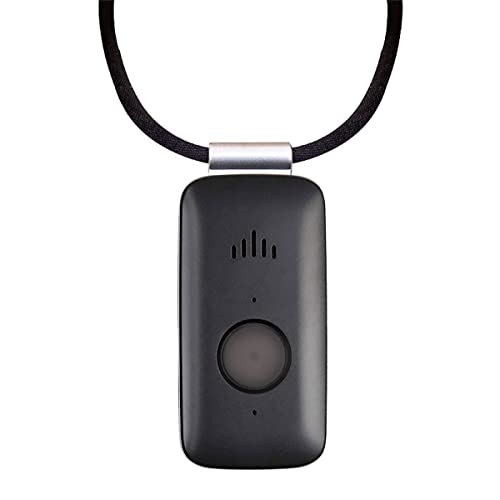
Mini Guardian 4G Medical Alert
4G, worn on the body, needs a plan
A small button worn on the body. Presses through to a monitoring centre.
Check price on Amazon
Medical Guardian MGHome Cellular
In-home base unit, needs a plan
An in-home unit for someone who does not go out much. No landline needed.
Check price on Amazon
These are supplies, not the job itself. Amazon does not sell the labour, the permit or the inspection.